History
The History of Obon in Hawaii
How obon traveled from Japan to Hawaii's sugar plantations in the 1800s and grew into a months-long, multi-ethnic Island tradition still going strong today.
Photo: Daniel Ramirez · CC BY-SA 4.0
Culture
New to bon dances in Hawaii? Here's what obon is, how the dance works, what the yagura and taiko are, and why everyone is welcome to join in.
If you spend a summer in Hawaii, sooner or later you'll hear taiko drums drifting across a temple parking lot on a Friday or Saturday night. That's a bon dance, and it's one of the most welcoming community events the Islands have. You don't need an invitation, you don't need to be Buddhist, and you definitely don't need to know how to dance.
Here's everything a first-timer needs to know before you go.
Obon (お盆) is a Japanese Buddhist tradition for honoring the spirits of ancestors. The belief is that during this time of year the spirits of those who have passed return to visit their families, so people clean graves, light lanterns to guide the spirits, and gather to remember them with gratitude and joy.
It's a celebration, not a somber occasion. In Jodo Shinshu Buddhism, obon is described as a "gathering of joy" — a chance to be thankful for the people who came before us while enjoying the present moment together.
The dance you'll see is called bon odori ("bon dance" in Japanese). Obon is the whole observance; bon odori is the dancing part of it. In Hawaii, most people just call the whole evening "the bon dance."
Walk onto the temple grounds and the layout is pretty consistent from place to place. In the center is the yagura (やぐら), a raised wooden tower or scaffold built for the festival. The musicians, singers, and drummers perform up on the yagura, and the dancers move in circles around its base.
You'll hear taiko (太鼓), the big Japanese drums that drive the rhythm. Many evenings open with a taiko performance before the dancing starts. Strings of paper lanterns hang overhead, and the edges of the grounds are lined with food booths.
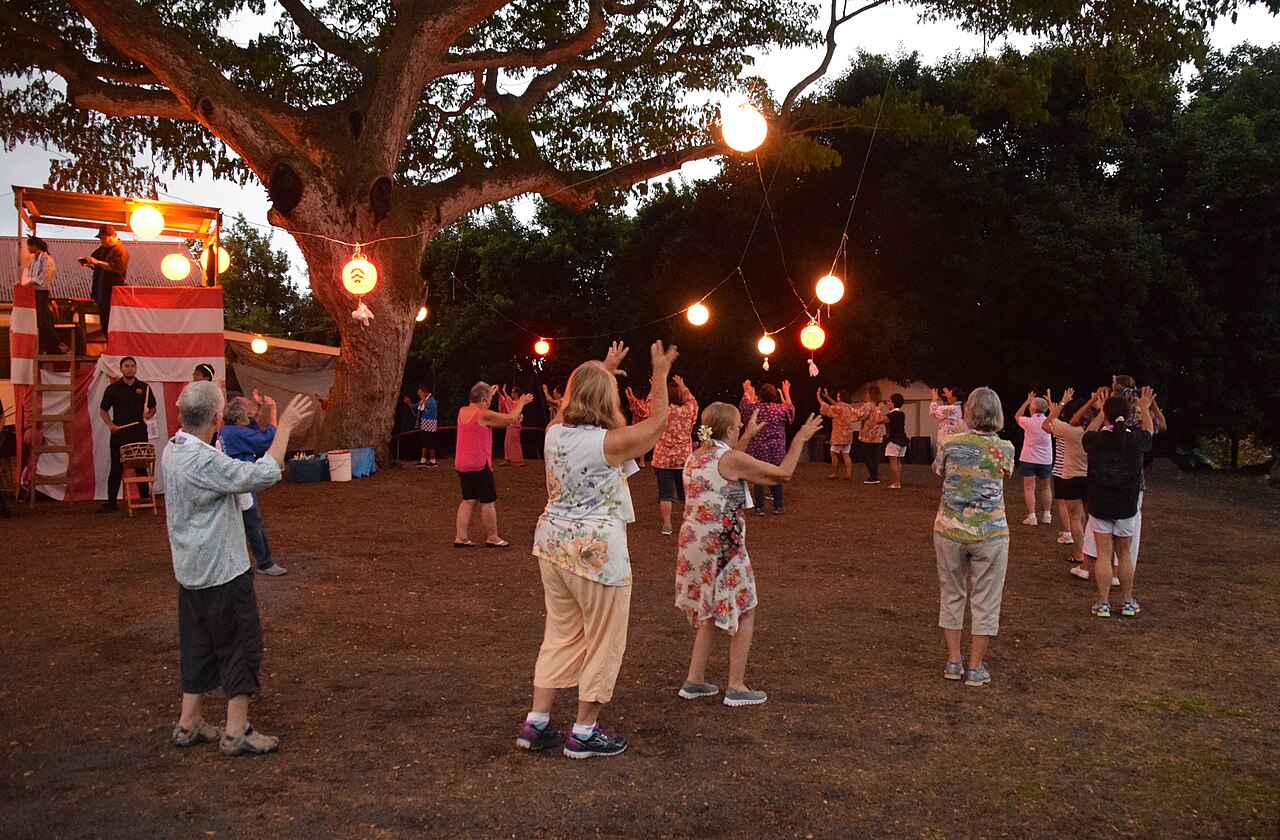
Dancers form one or more big concentric circles around the yagura and repeat the same simple movements in unison. Each song has its own choreography — a loop of steps, claps, turns, and hand gestures that repeats over and over for the length of the song.
That repetition is the whole point. Once you've watched a circle go around once or twice, you can usually fall in behind someone who knows the steps and copy them. The experienced dancers tend to be in the inner ring; newcomers and kids fill the outer ring, where mistakes disappear into the crowd.
Nobody is judging you, and nobody expects perfection. If you want a fuller walkthrough before you go, read our first-timer's guide to the dance circle.
Bon dances are hosted by Hawaii's Buddhist temples, and they serve two purposes at once. Spiritually, the evening honors ancestors. Practically, it's usually the temple's biggest fundraiser of the year — the food booths and donations help cover operations, community programs, and the upkeep of buildings that have stood for generations.
That's part of why grabbing a plate is genuinely part of taking part. The andagi line is doing real good. (More on the food in what to eat at a Hawaii bon dance.)
In Japan, obon is a short observance of about three days. In Hawaii it stretched out into a whole season — running roughly from June through August, sometimes into September, with dances on nearly every weekend.
Temples deliberately spread their dates out so they don't overlap, which means you can go to a different bon dance almost every weekend of the summer. You can browse every 2026 bon dance on our schedule, or jump straight to your island: Oʻahu, Big Island, Maui, or Kauaʻi.
This is the part worth repeating, because visitors often hesitate. You do not need to be Buddhist, Japanese, or local. You don't need to know the dances or own a yukata. You just need to show up.
Bon dances in Hawaii have grown into genuinely multi-ethnic community gatherings — families of every background turn out, eat, and dance together. The tradition has been part of Island life for well over a century, and the doors are open to anyone who wants to join the circle.
A few things to read before you go: our bon dance etiquette and what-to-wear guide covers the small courtesies, and the bon dance guide gives you the season at a glance. Then find one near you on the full schedule and go.
History
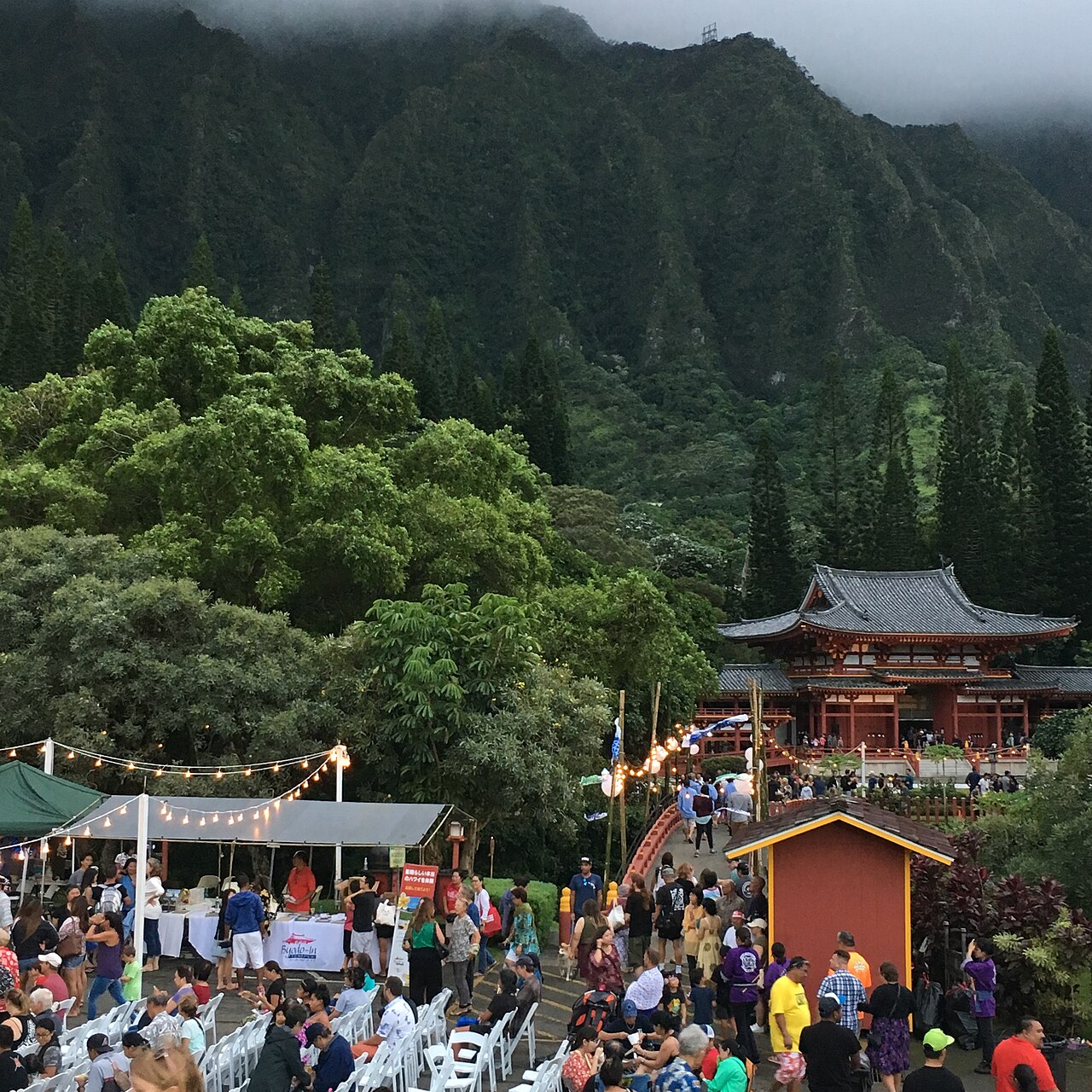
How obon traveled from Japan to Hawaii's sugar plantations in the 1800s and grew into a months-long, multi-ethnic Island tradition still going strong today.
Photo: Daniel Ramirez · CC BY-SA 4.0
Guides
What to wear to a Hawaii bon dance, when it's okay to join the circle, photography courtesy, and the small respectful touches that make you a good guest.
Photo: Daniel Ramirez · CC BY-SA 4.0
Food
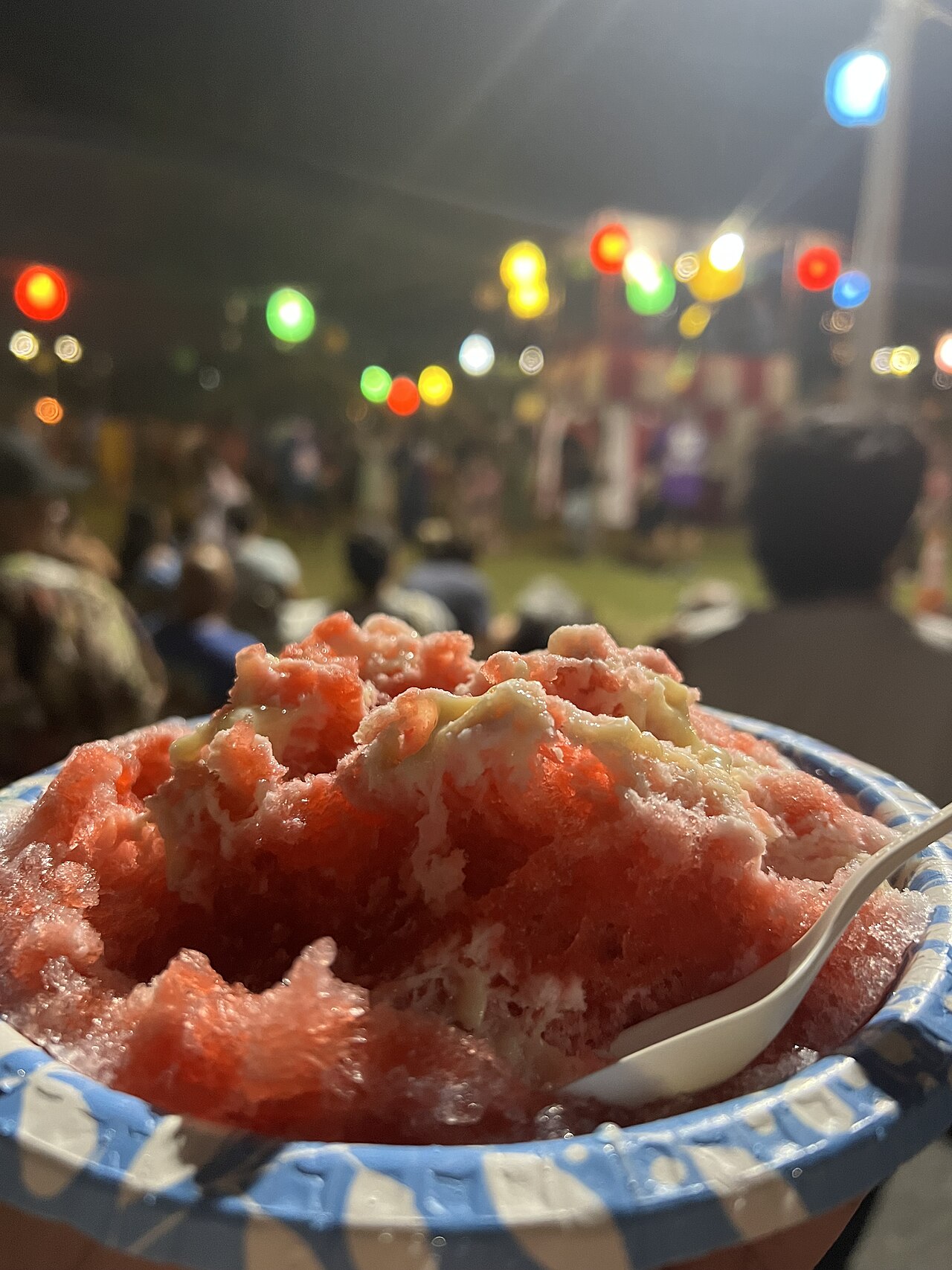
A field guide to Hawaii bon dance food booths — andagi, the andadog, plate lunches, saimin, teri chicken, shave ice and more. Bring cash and an appetite.
Photo: Yoshi Canopus · CC BY-SA 4.0
Nothing to show here.