Guides
A First-Timer's Guide to the Bon Dance Circle
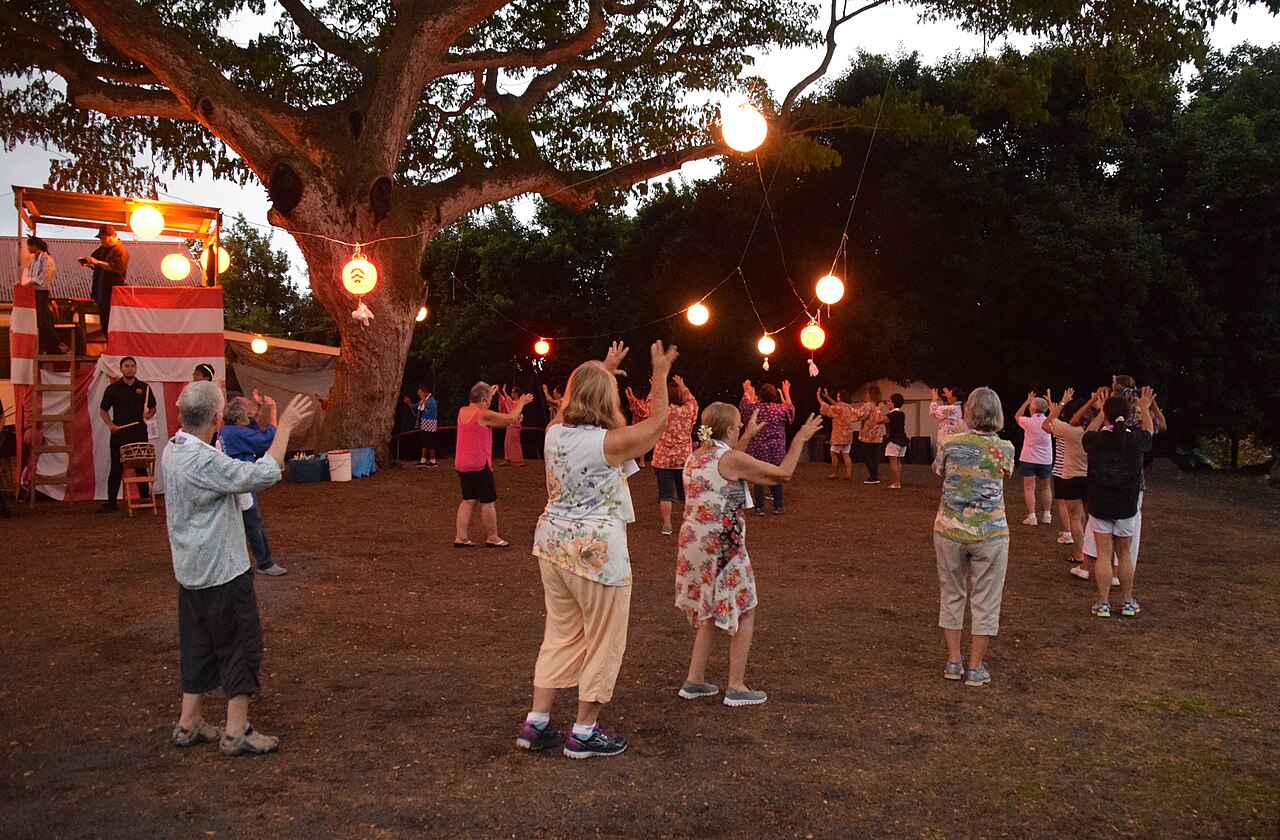
Never danced bon odori before? Here's exactly how the circle works, the common songs you'll hear, and why you need zero experience to join in.
Photo: Yoshi Canopus · CC BY-SA 4.0
Guides
What to wear to a Hawaii bon dance, when it's okay to join the circle, photography courtesy, and the small respectful touches that make you a good guest.
Bon dances are about as relaxed as community events get, and there are very few hard rules. But a handful of small courtesies go a long way, and knowing them ahead of time means you can show up, relax, and enjoy the night like a regular.
Here's how to be a good guest.
Short version: dress casually. Shorts and a T-shirt are completely normal, and no one will look at you twice. These are outdoor summer events on warm nights, so comfortable and breathable beats dressed-up.
If you want to lean in, some people wear a yukata (a lightweight cotton summer kimono) or a happi coat (a short, loose festival jacket). Both are traditional bon dance attire and you'll see plenty of them, especially on dancers in the inner circles. They are entirely optional — a nice touch, never a requirement. Some temples even sell or rent yukata on site.
Comfortable shoes or slippers (what the rest of the country calls flip-flops) are smart, since you'll be standing, walking on grass or asphalt, and possibly dancing.
Always. That's the honest answer. Bon odori is participatory by design — the dancing is for everyone, not a performance you watch from the sidelines.
If you're not sure of the steps, watch the experienced dancers for a song or two, then fall in at the back of the outer ring and copy the person ahead of you. The movements repeat on a loop, so you'll catch on within a verse. Nobody expects perfection, and the outer ring is full of beginners and kids.
If you'd like a feel for the actual dances first, our first-timer's guide to the dance circle walks through how it works and names a few common songs.
Bon dances are beautiful and very photogenic, and taking pictures is generally fine. Just be considerate about it.
Don't block the dance circle or the food lines to get your shot, and don't wander up onto the yagura. If you want close-ups of individual people, especially kids or dancers in yukata, a quick smile and nod to ask is the polite move. And if any service or chanting is happening inside the temple itself, that's a moment to put the camera down.
If you step inside a temple building — the main hall, a shrine room, sometimes a hall where food is served indoors — look for a rack of shoes at the entrance. Taking your shoes off before entering is standard, the same as entering a local home. Outside on the grounds, where the dancing and booths are, your shoes stay on.
When in doubt, follow what the people in front of you are doing.
Here's the thing visitors sometimes miss: the bon dance is usually the temple's biggest fundraiser of the year. The food booths, the game tables, the little donation boxes — that's how these historic temples keep their lights on and their grounds maintained.
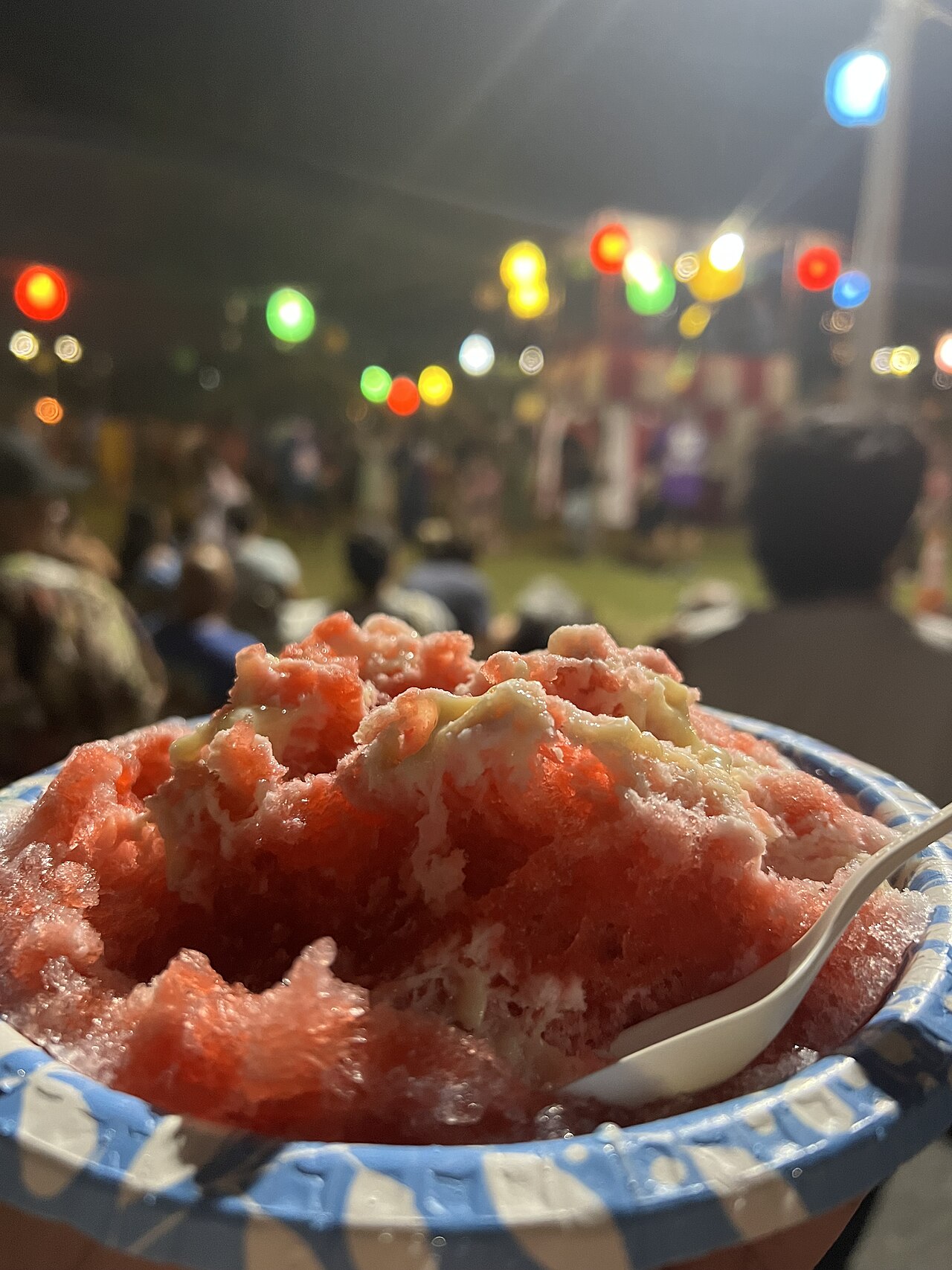
So buying a few plates of food and a shave ice isn't just a treat, it's the way you take part. Bring cash, because most booths are cash-only. (We break down the food in what to eat at a Hawaii bon dance.)
That's really all there is to it. If you want the bigger picture on what obon is and why it happens, start with what is a bon dance. When you're ready to go, browse every 2026 bon dance or check your island: Oʻahu, Maui, Big Island, or Kauaʻi.
Guides
Never danced bon odori before? Here's exactly how the circle works, the common songs you'll hear, and why you need zero experience to join in.
Photo: Yoshi Canopus · CC BY-SA 4.0
Culture
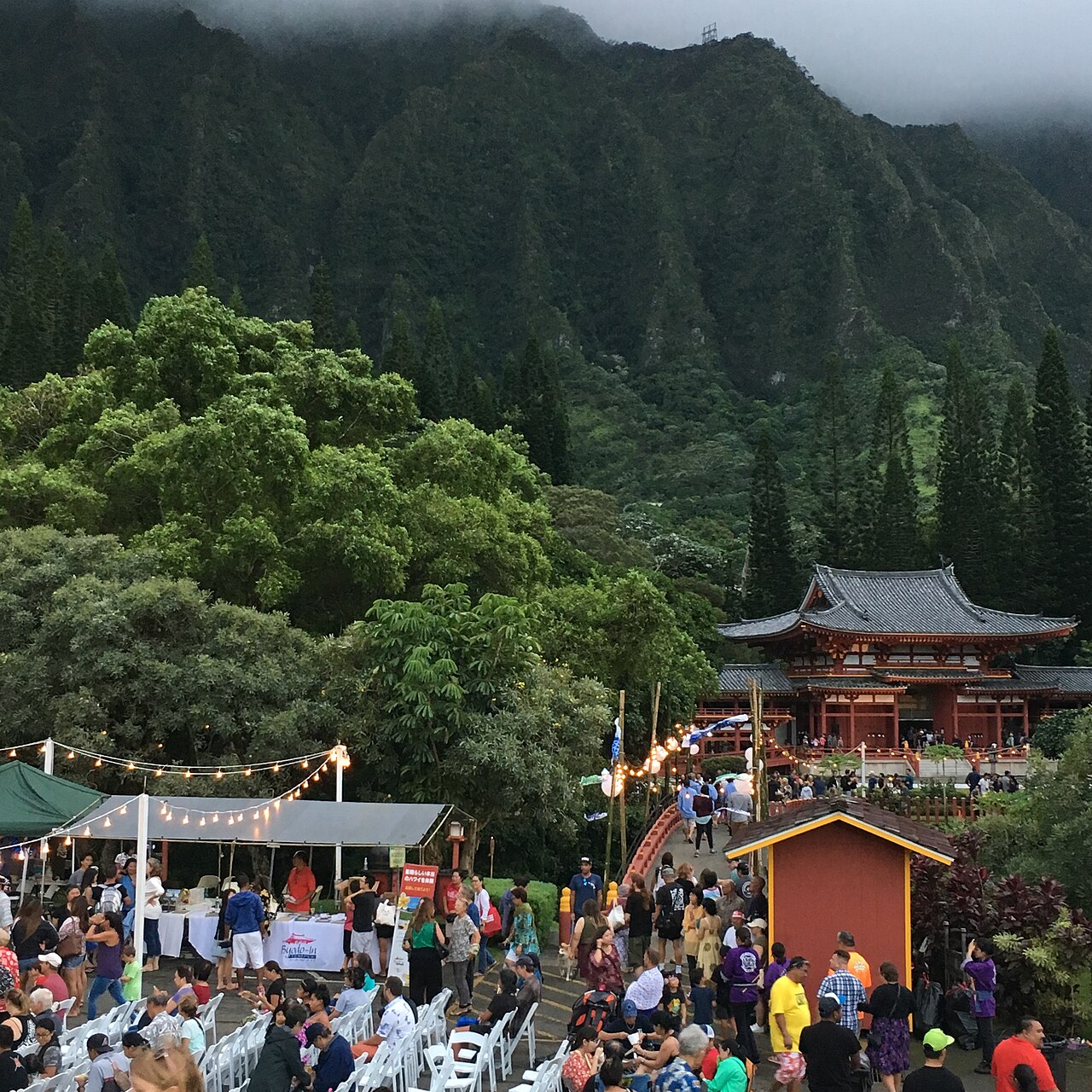
New to bon dances in Hawaii? Here's what obon is, how the dance works, what the yagura and taiko are, and why everyone is welcome to join in.
Photo: Yoshi Canopus · CC BY-SA 4.0
Food
A field guide to Hawaii bon dance food booths — andagi, the andadog, plate lunches, saimin, teri chicken, shave ice and more. Bring cash and an appetite.
Photo: Yoshi Canopus · CC BY-SA 4.0
Nothing to show here.