Culture
What Is a Bon Dance? A Visitor's Guide to Obon in Hawaii
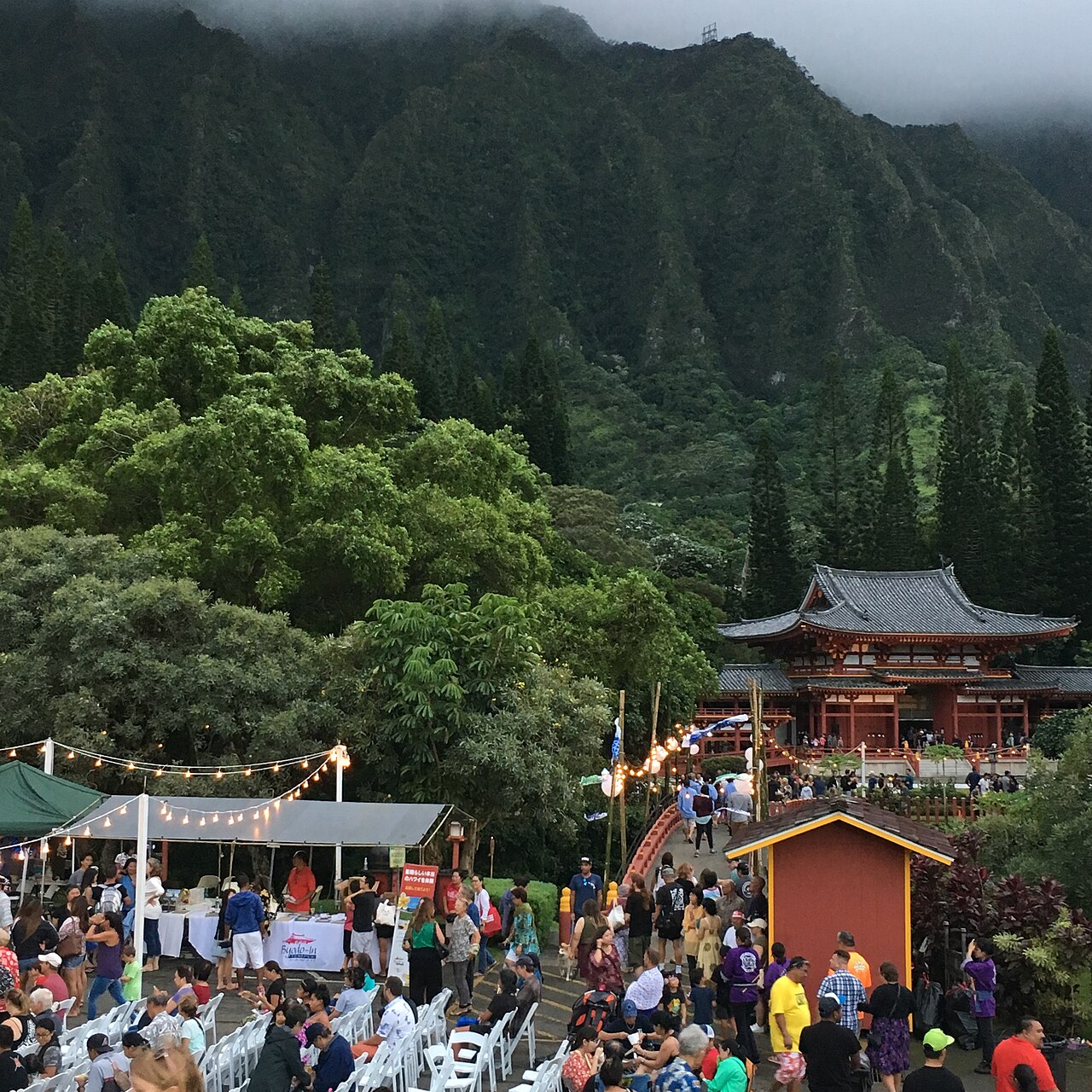
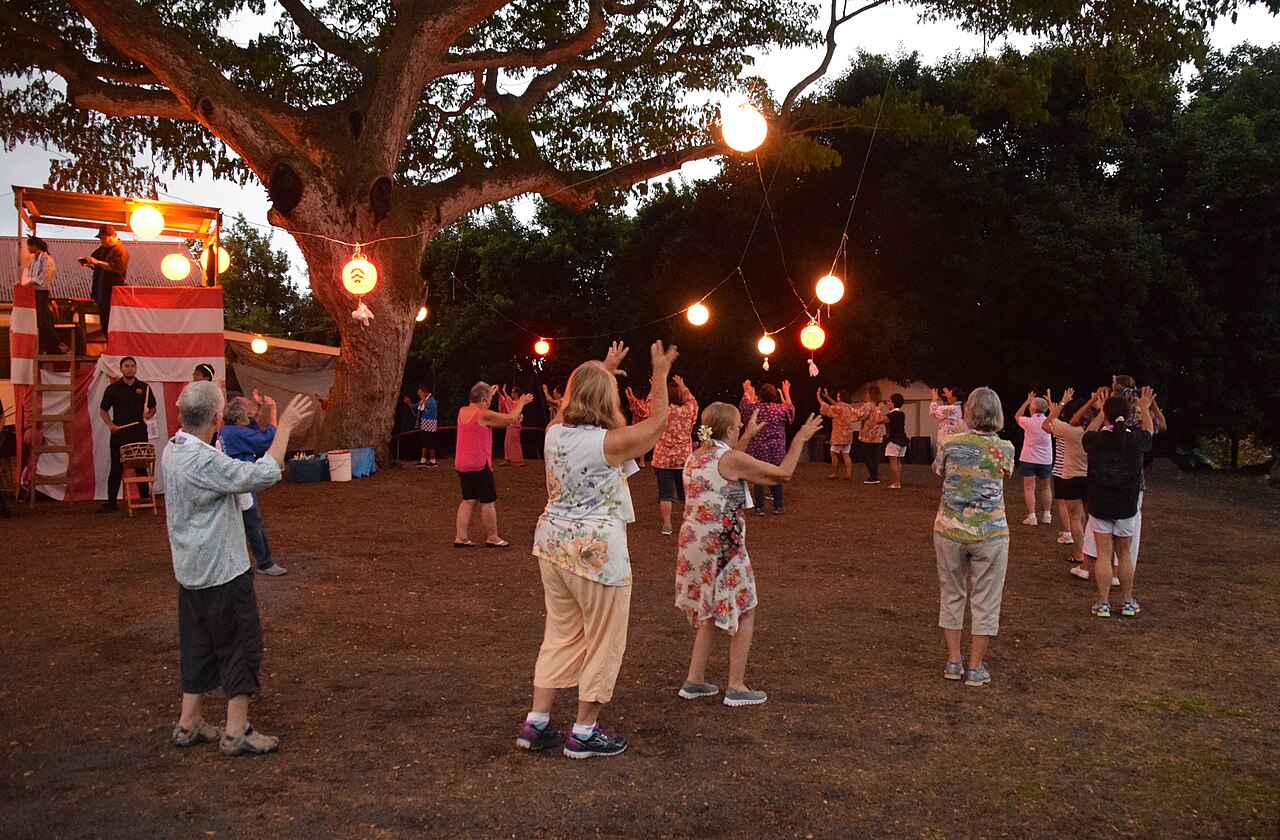
New to bon dances in Hawaii? Here's what obon is, how the dance works, what the yagura and taiko are, and why everyone is welcome to join in.
Photo: Yoshi Canopus · CC BY-SA 4.0
Food
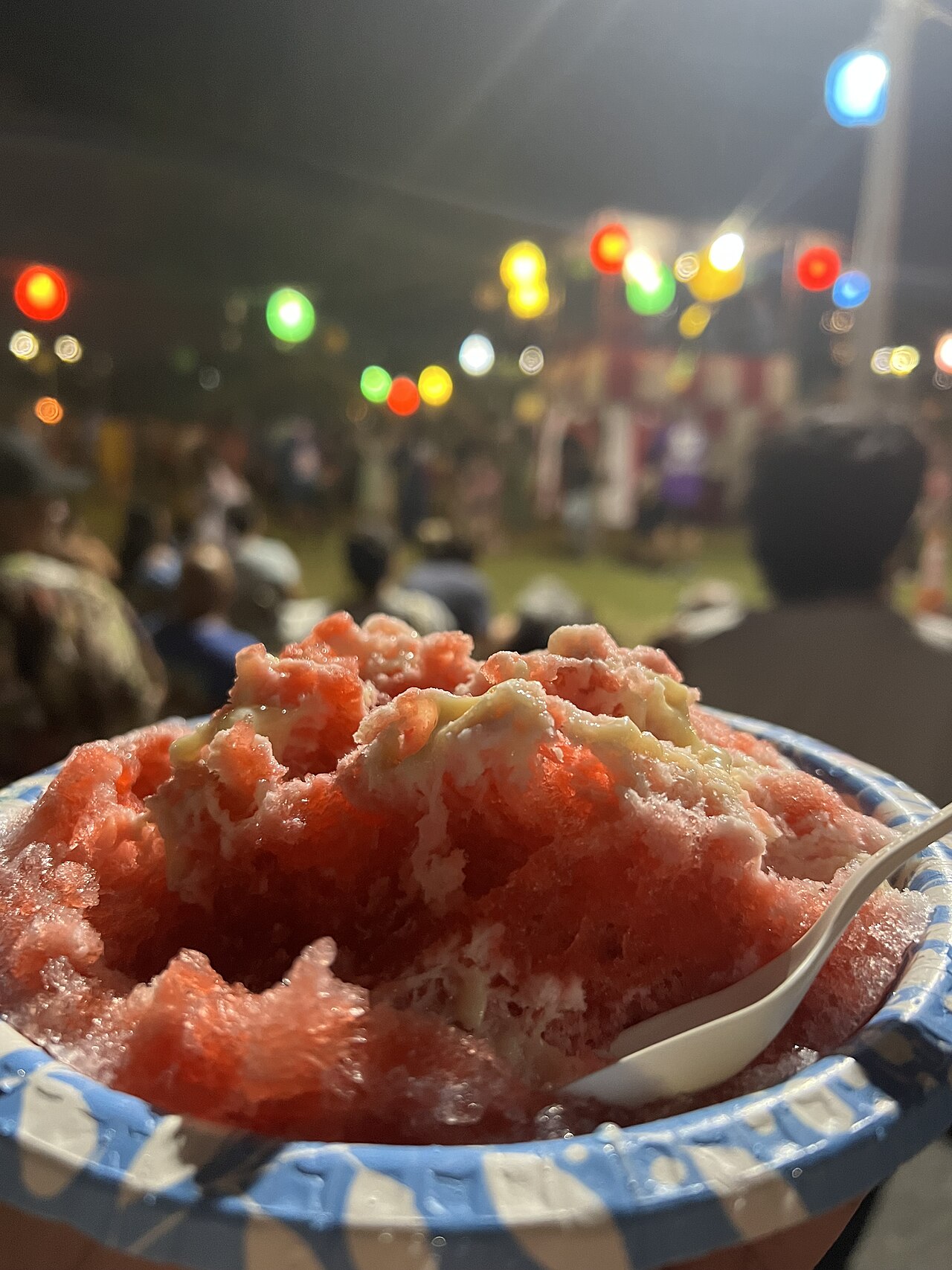
A field guide to Hawaii bon dance food booths — andagi, the andadog, plate lunches, saimin, teri chicken, shave ice and more. Bring cash and an appetite.
For a lot of locals, the dancing is only half the reason to show up at a bon dance. The other half is the food. Temple grounds turn into a row of booths cooking up some of the best local-style eats you'll find all summer, and every dollar you spend helps the temple.
Come hungry, bring cash, and pace yourself. Here's what to look for.
If you eat one thing at a bon dance, make it andagi — Okinawan-style deep-fried doughnuts. They're golden, slightly crisp on the outside, dense and cakey inside, and barely sweet. They're sold hot in bags, and at popular temples the andagi line can run twenty or thirty minutes deep. It's worth it.
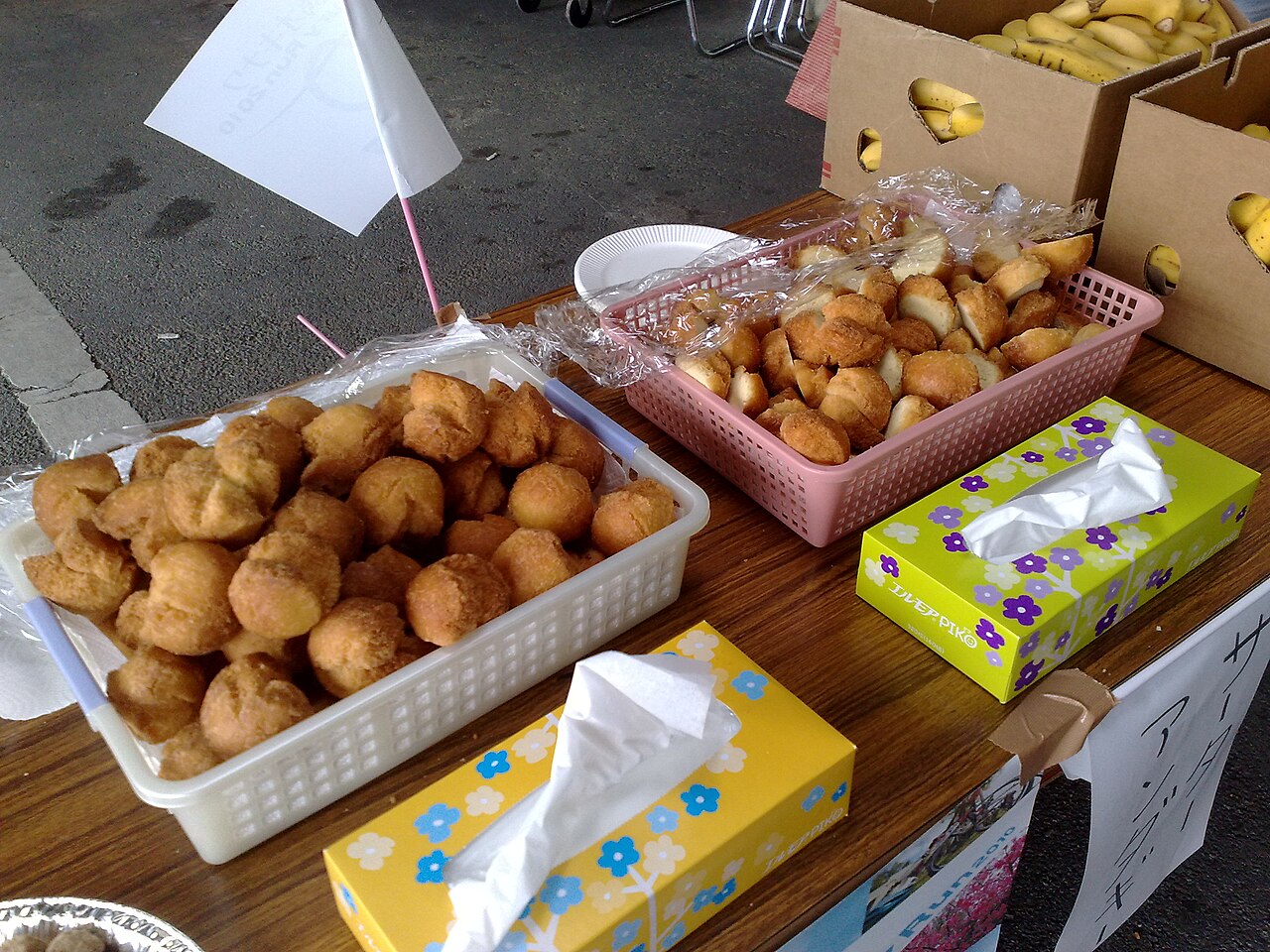
Andagi are Okinawan-style deep-fried doughnuts: crisp outside, dense and cakey inside, and often sold hot in small bags. · Photo: Fumiaki Yoshimatsu · CC BY-SA 2.0
Then there's the andadog: a whole hot dog on a stick, dipped in andagi batter and deep-fried. Think corn dog, but better, and very much a Hawaii bon dance creation. If you see one, get one.
The savory side of a bon dance is a tour of local comfort food. Expect to find some mix of:
Menus vary from temple to temple, and certain temples are genuinely famous for one signature dish, so part of the fun is seeing what each one does best. Prices are reasonable — most plates land in the single digits.
On a warm Island night, shave ice is close to mandatory — finely shaved ice soaked in flavored syrup, sometimes over ice cream or with a scoop of azuki beans. There's usually mochi for sale too, and at some events you'll find baked goods and other Japanese sweets.
These are great to grab between dance songs, when the circle pauses and everyone drifts back toward the booths.
A bon dance fills up as the evening goes on, so a little strategy helps. Arrive on the earlier side, do a quick lap to scope out every booth, and hit the andagi line first before it stretches. Grab your savory plate next, then save the shave ice and sweets for later in the night.
Many temples publish a flyer or post signs listing what each booth is selling and the prices, so you can plan your spending. Portions tend to be generous and prices stay friendly, which makes it easy to share a few things across a group and try more of the menu.
If you have dietary needs, scan the savory booths for grilled and noodle options, and don't be shy about asking a volunteer what's in a dish. They're proud of the food and happy to talk about it.
This is the one rule that matters: most booths are cash-only. A few temples have started taking cards, but don't count on it, and don't be the person holding up the andagi line. Plan on $20 to $30 in small bills per person, which covers a couple of plates, something sweet, a drink, and a little extra to drop in a donation box.
The food booths aren't a side hustle — they're the point, financially. A bon dance is typically the temple's biggest fundraiser of the year, and the food sales and donations help sustain operations, community programs, and the upkeep of buildings that have served these communities for generations.
So buying a few plates is genuinely how you take part. You eat well, the temple keeps going, and everybody wins.
When you've eaten your fill, wander back to the circle — our first-timer's guide to the dance circle gets you dancing, and the etiquette guide covers the small courtesies. New to the whole thing? Start with what is a bon dance, then browse every 2026 bon dance or find one on your island: Oʻahu, Maui, Big Island, or Kauaʻi.
Culture
New to bon dances in Hawaii? Here's what obon is, how the dance works, what the yagura and taiko are, and why everyone is welcome to join in.
Photo: Yoshi Canopus · CC BY-SA 4.0
Guides
What to wear to a Hawaii bon dance, when it's okay to join the circle, photography courtesy, and the small respectful touches that make you a good guest.
Photo: Daniel Ramirez · CC BY-SA 4.0
Guides
Never danced bon odori before? Here's exactly how the circle works, the common songs you'll hear, and why you need zero experience to join in.
Photo: Yoshi Canopus · CC BY-SA 4.0
Nothing to show here.