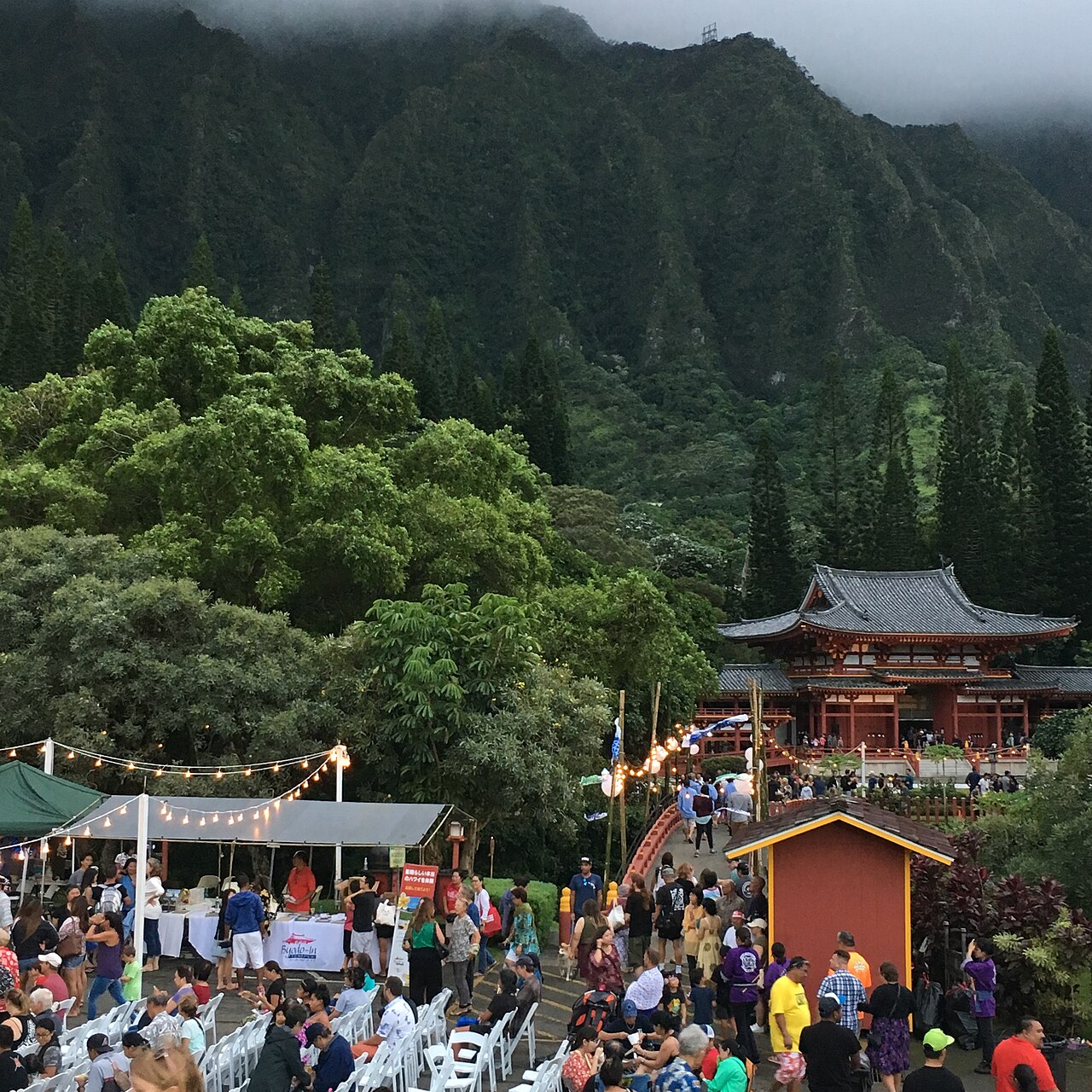
The single biggest reason visitors hang back at a bon dance is the fear of looking lost in the circle. Forget that. Bon odori is built so that anyone can join, and within one song you'll be doing it too. Here's exactly how it works.
How the circle works
Everyone dances in big circles around the yagura — the wooden tower in the center where the drummers, singers, and musicians perform. There are often two or more concentric rings going around at once.
Each song has its own short choreography: a loop of steps, claps, turns, and hand gestures that repeats for the whole length of the song. Once the loop comes around once or twice, you've basically seen the whole dance.
The circle moves at a comfortable, steady pace. This isn't fast or athletic — it's a gentle, rhythmic shuffle that people of every age do, from little kids to grandparents.
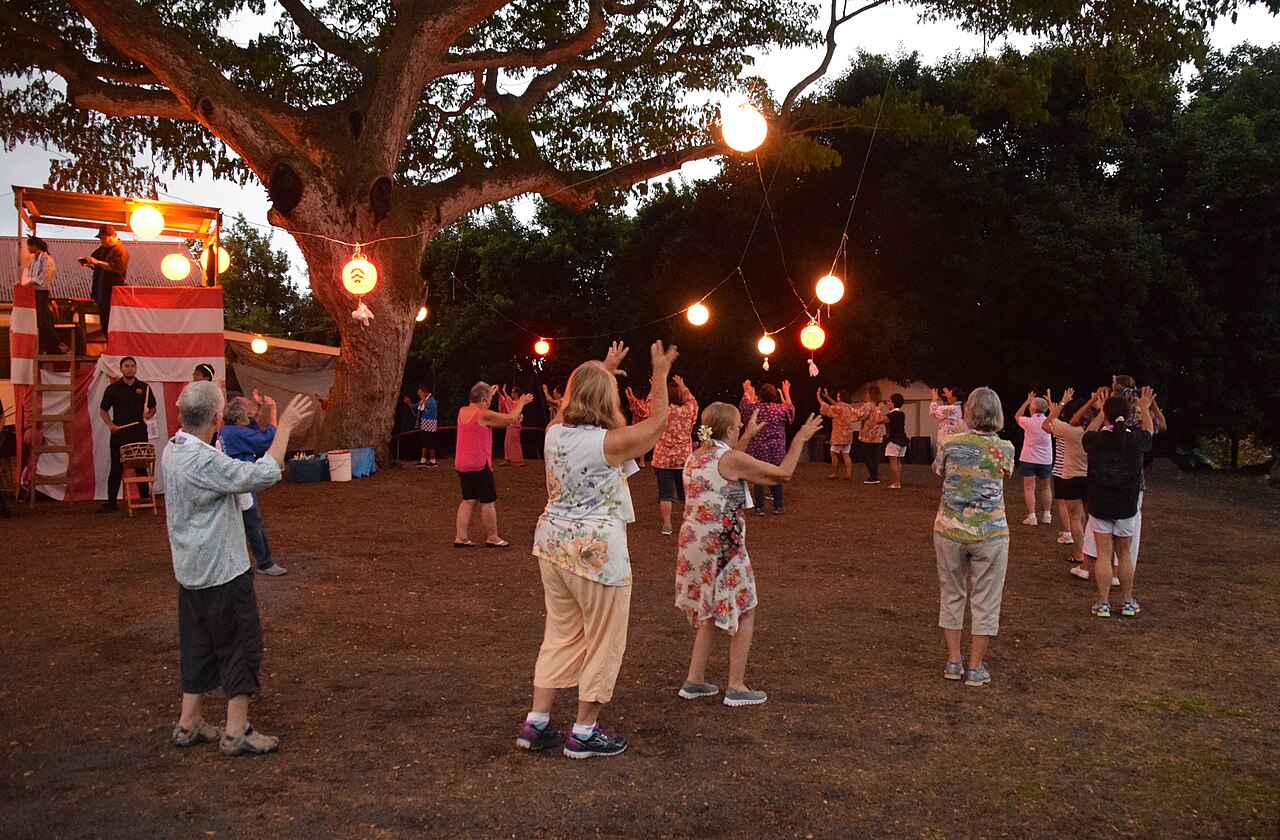
You just copy the person ahead of you
This is the secret that makes the whole thing work: you don't memorize anything, you copy. Watch the dancer in front of you and mirror their movements a beat behind. Because the steps repeat, you'll lock in quickly.
The experienced dancers naturally gather in the inner rings. Newcomers, visitors, and kids fill the outer ring, where it doesn't matter if you're half a beat off or facing the wrong way. Slot in at the back of the outer circle and follow along.
The songs you'll hear
Each song has its own dance, and a handful come up again and again across Hawaii. A few worth knowing:
- Tankō Bushi (the coal miner's dance) — the most famous and beginner-friendly of them all. The movements act out a coal miner's work: digging, tossing a sack of coal over your shoulder, shading your eyes, and pushing a cart. It's intuitive, fun, and a great first dance to learn.
- Fukushima Ondo — a traditional favorite, often used to close out the evening.
- Iwakuni Ondo — brought to Hawaii by immigrants from the Iwakuni area of Yamaguchi Prefecture and still danced today.
- Beautiful Sunday — a cheerful, modern crowd-pleaser. The Japanese version of this old pop song became a bon dance staple, and it's an easy one to pick up.
- Pokémon Ondo — yes, really. A kid-favorite tune themed around Pokémon. When it comes on, the circle fills with delighted children (and plenty of adults).
You'll also hear traditional songs played live with taiko drums, flutes, and bells, mixed in with recorded tracks. The blend of old and new is part of what makes Hawaii bon dances feel so alive.
No experience needed
Let this sink in: you do not need any experience, you do not need to be Buddhist or Japanese or local, and you do not need a costume. The whole tradition is built around communal participation, not performance.
Don't overthink the steps. Follow the rhythm, copy the person ahead, and let the repetition carry you. If you lose the thread, just keep moving in time and pick the pattern back up on the next loop. Everyone around you was a first-timer once, and the only real mistake is standing on the sidelines all night.
Ready to go
Before you head out, a couple of quick reads: what is a bon dance gives you the full picture, the etiquette and what-to-wear guide covers the small courtesies, and what to eat at a bon dance sorts out dinner.
Then find one near you: browse every 2026 bon dance, check the bon dance guide, or jump to your island — Oʻahu, Maui, Big Island, or Kauaʻi. See you in the circle.
Find a bon dance near you
Browse every 2026 bon dance by island — dates, times, and locations.
See the schedule